
General Details for Government Facilities Perimeter Security
Government facilities perimeter security delivers a robust, multi-layered defense to protect sensitive buildings, campuses, and critical public infrastructure from unauthorized access, intrusion, vandalism, and hostile threats. It integrates high-security fencing or reinforced boundary walls with anti-climb and anti-dig measures, combined with fiber-optic–based Perimeter Intrusion Detection Systems (PIDS) that provide real-time, high-accuracy detection of cutting, climbing, tampering, and ground disturbance with minimal false alarms. The solution is further enhanced by intelligent surveillance, secure access control points, and centralized command-and-control platforms, ensuring continuous situational awareness, rapid response, asset protection, and compliance with national security regulations and government safety standards.
FOL-101
Securing Fences & Buried Perimeter for Government Buildings
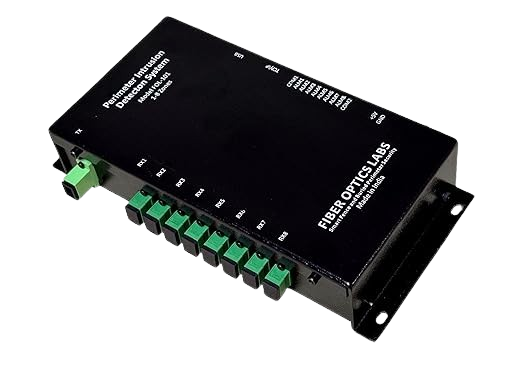
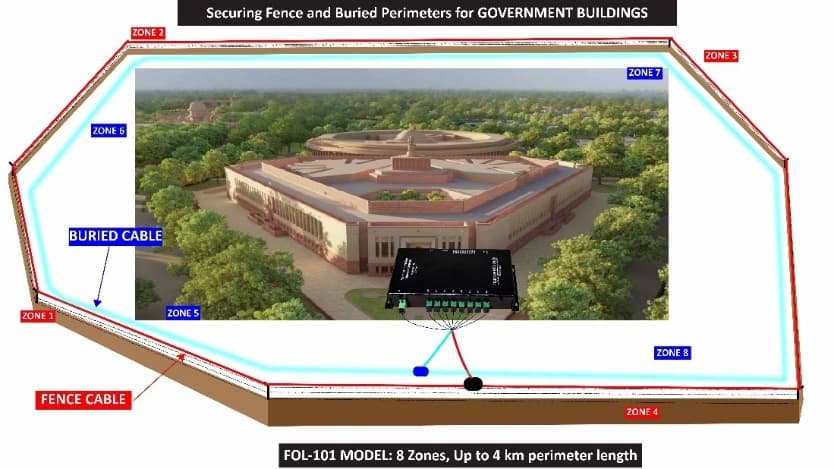
Securing the perimeter is the first and most critical layer of protection for government buildings, public sector campuses, and administrative complexes. The FOL-101 Fence and Buried Perimeter Intrusion Detection System provides continuous, real-time monitoring of both perimeter fence lines and underground boundaries using advanced fiber-optic sensing technology. The system is specifically designed to detect unauthorized access, trespassing, vandalism, theft, and hostile intrusion attempts, including fence climbing, cutting, pulling, lifting, and tampering, as well as digging and tunneling near the protected perimeter — before a breach occurs. With high detection accuracy and very low nuisance alarms, FOL-101 delivers reliable security for sensitive and high-importance government facilities.
How the Fence and Buried Perimeter Security Works?
A fiber-optic sensing cable is installed on the perimeter fence and/or buried underground along the government building or campus boundary. The perimeter is divided into Zone 1 to Zone 8, each covering up to 500 m range. Any physical disturbance on the fence or ground generates an instant alarm. The controller identifies the exact zone of intrusion, and alarms are transmitted to the central control room for immediate response.
Zone-Based Alarm Detection
- Exact intrusion location displayed zone-wise
- Multiple intrusions can be detected simultaneously across different zones
- Faster response time and improved operational efficiency
- Ideal for sensitive government offices and restricted areas
Key Advantages for Government Building Security
- Early intrusion detection before perimeter breach
- Extremely low nuisance alarms with 24×7 reliable security
- No electrical power required on fence or buried perimeter
- Immune to EMI, lightning, and harsh weather conditions
- Suitable for large and complex government campuses
- Centralized monitoring from a secure government control room
FR-201
Securing Fence and Buried Perimeter for Government Buildings
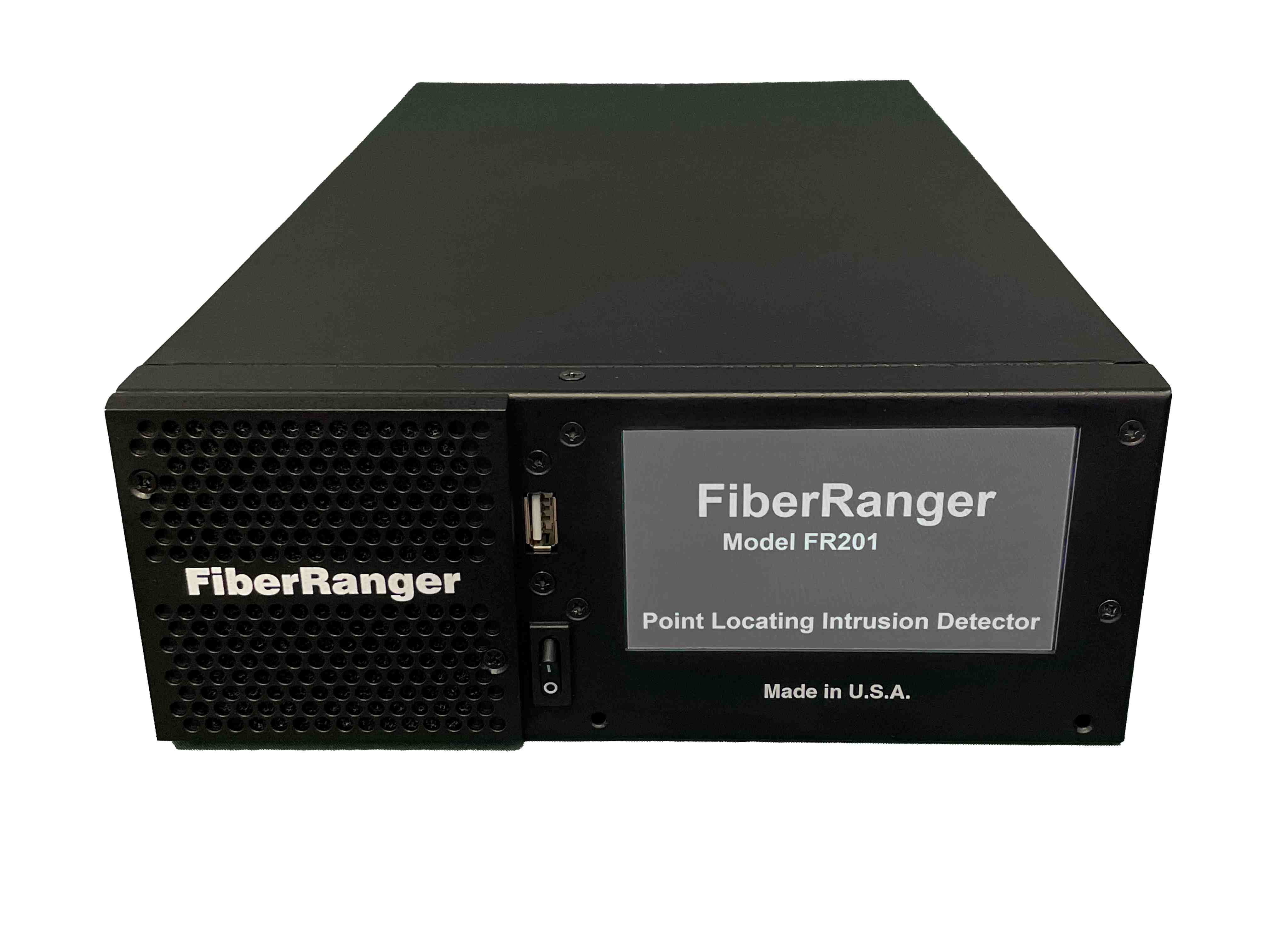
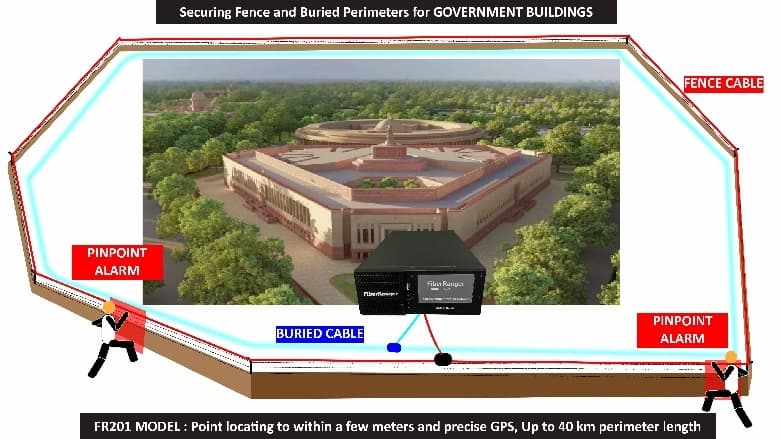
FR-201 is a point-locating Fiber Optic Intrusion Detection System designed to protect government buildings, administrative complexes, and other high-importance facilities. Government facilities require multi-layered, fail-safe perimeter security to prevent unauthorized access, vandalism, sabotage, theft, and external intrusion attempts. The FR-201 provides continuous, real-time monitoring of both perimeter fencing and buried boundaries using advanced fiber-optic sensing technology. The system is engineered to detect, classify, and precisely locate attempts to breach the secured perimeter — including fence attacks, digging, or tunneling — well before a security breach occurs. This enables immediate and coordinated response by security personnel while ensuring reliable protection for mission-critical government infrastructure.
How the System Works?
A single-mode fiber-optic sensing cable is installed on the perimeter fence and/or buried underground along the government facility boundary. The same sensing cable can protect both fence and buried perimeters simultaneously. Any physical disturbance creates a signal analyzed by the FR-201 controller. The system generates a pinpoint location alarm within a few meters, and the exact intrusion point is displayed on the monitoring interface, allowing security teams to respond quickly and accurately.
Fence Intrusion Detection
- Climbing attempts
- Fence cutting
- Pulling or lifting of the fence
- Fence tampering
Buried Perimeter Detection
- Digging and tunneling
- Ground disturbance near walls or foundations
- Covert intrusion attempts
Pinpoint Location Alarms
- Intrusion location accuracy within a few meters
- Supports multiple simultaneous intrusion events
- Exact intrusion point displayed on monitoring interface
System Integration
- Alarm data available via TCP/IP (XML, ASCII, Modbus)
- Relay output integration
- Can automatically trigger PTZ cameras, hooters/sirens, and flood lights
Key Advantages for Government Building Security
- Early detection before breach
- Map-based alarms showing precise meter location and GPS coordinates
- Extremely low nuisance alarms with intelligent pattern recognition
- 24×7 reliable perimeter protection
- No electrical power required in the field
- Immune to EMI, lightning, and harsh weather conditions
- Cut-immune configuration — system remains operational even if cable is cut
- High reliability for mission-critical and sensitive facilities
- Centralized monitoring from secure command and control rooms
- Precise intrusion location enabling automatic camera targeting
© Fiber Optics Labs 2026. All rights reserved.
