
General Details for Data Network Cables Security Perimeter Security
Data network cable perimeter security is a multi-layered protection system designed to prevent unauthorized access, cable theft, tampering, and service disruptions across critical communication infrastructure. It uses fiber-optic–based Perimeter Intrusion Detection Systems (PIDS) to provide real-time detection of cutting, digging, or physical interference. Combined with intelligent surveillance, secure access control, and centralized monitoring, the system ensures continuous protection, rapid response, network reliability, and uninterrupted data communication.
FR-201
Securing Data Network Security
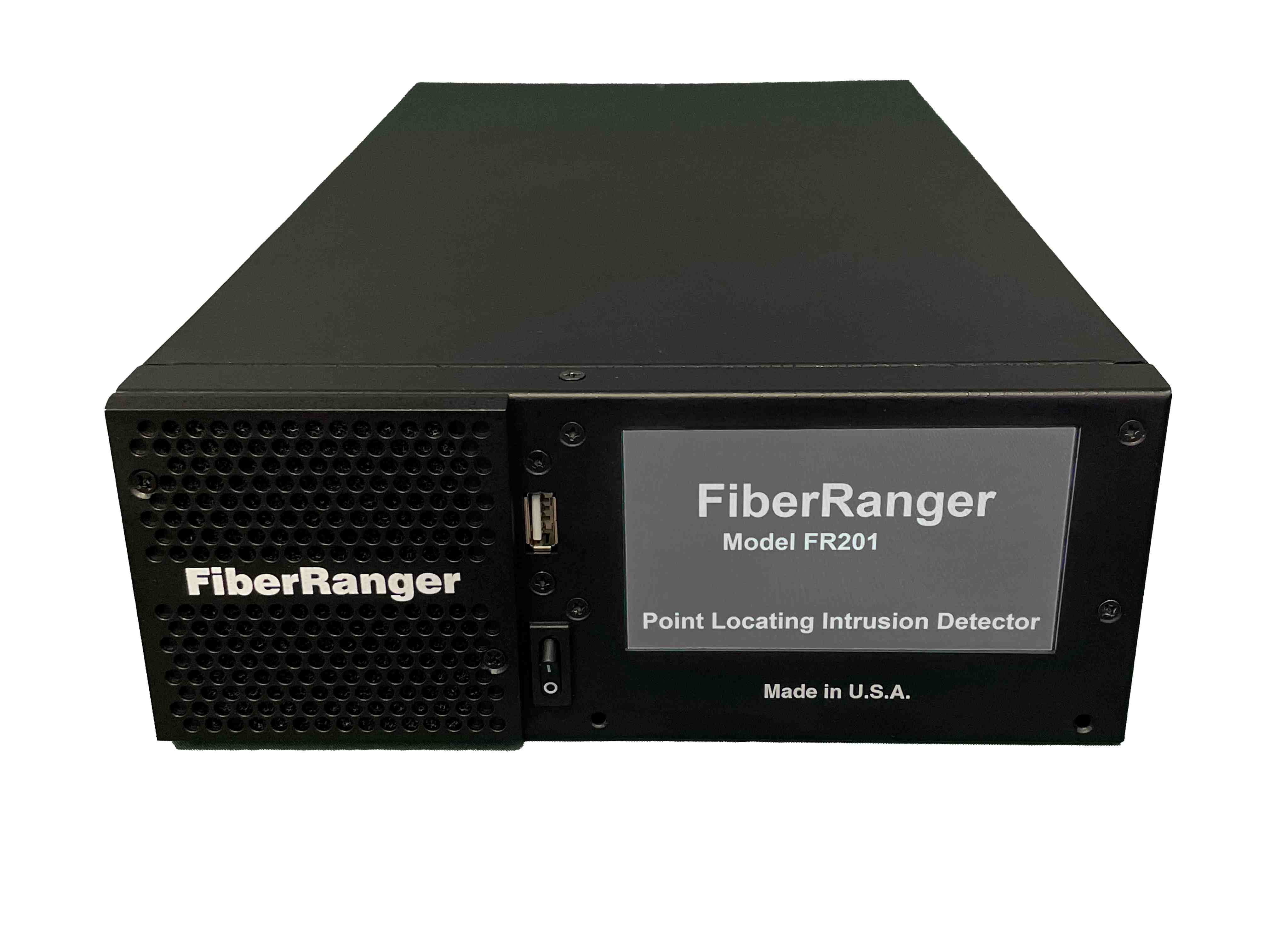

FR-201 is a point-locating Fiber Optic Intrusion Detection System designed to secure critical data network infrastructure, telecom backbone routes, and communication fiber cables. Data networks require reliable, fail-safe protection to prevent fiber tapping, cable tampering, digging activities, or sabotage attempts that could disrupt communication services or compromise sensitive data.
The FR-201 provides continuous, real-time monitoring of fiber-optic communication routes using advanced distributed fiber-optic sensing technology. The system is engineered to detect, classify, and precisely locate intrusion attempts such as cable tapping, digging, vibration, cutting, or tampering — before the communication infrastructure is damaged or compromised — enabling rapid and effective response.
The system can monitor up to 50 km of data network infrastructure per controller, making it ideal for long-distance telecom and critical communication corridors.
How the System Works
- A single-mode fiber-optic sensing cable is installed along the data communication route or alongside existing telecom fiber infrastructure.
- The FR-201 controller sends optical pulses through the sensing fiber, enabling continuous monitoring of disturbances along the cable.
- When any physical disturbance occurs near the fiber cable, it generates vibration signals within the optical fiber.
- The FR-201 controller analyzes these signals using advanced pattern-recognition algorithms to determine whether the disturbance is a real threat or environmental noise.
- The system generates a pinpoint location alarm within a few meters, and the exact disturbance location is displayed on the monitoring interface, allowing security teams to respond quickly and accurately.
Data Network Intrusion Detection
- Unauthorized fiber tapping attempts
- Fiber cable cutting or tampering
- Digging activities near underground fiber routes
- Vibration caused by excavation tools or machinery
- Communication infrastructure sabotage attempts
Pinpoint Location Alarms
- Intrusion location accuracy within a few meters
- Supports multiple simultaneous intrusion events
- Monitoring coverage up to 50 km per controller
Integration
-
Alarm data available via:
- TCP/IP (XML, ASCII, Modbus)
- Relay outputs
-
Can automatically trigger:
- Network security alerts
- Monitoring dashboards
- Security alarms or notification systems
Key Advantages for Data Network Security
- Continuous monitoring of long-distance communication routes
- Coverage up to 40 km per controller
- Early detection of threats to critical communication infrastructure
- Alarms displayed on maps with precise meter location and GPS coordinates
- Extremely low nuisance alarms using intelligent pattern-recognition algorithms
- No electrical power required along the sensing cable
- Immune to EMI, lightning, and harsh environmental conditions
- High reliability for mission-critical communication networks
- Centralized monitoring from a secure Network Operations Center (NOC)
- Precise disturbance location enabling rapid security response
FR-301
Securing Data Network Security
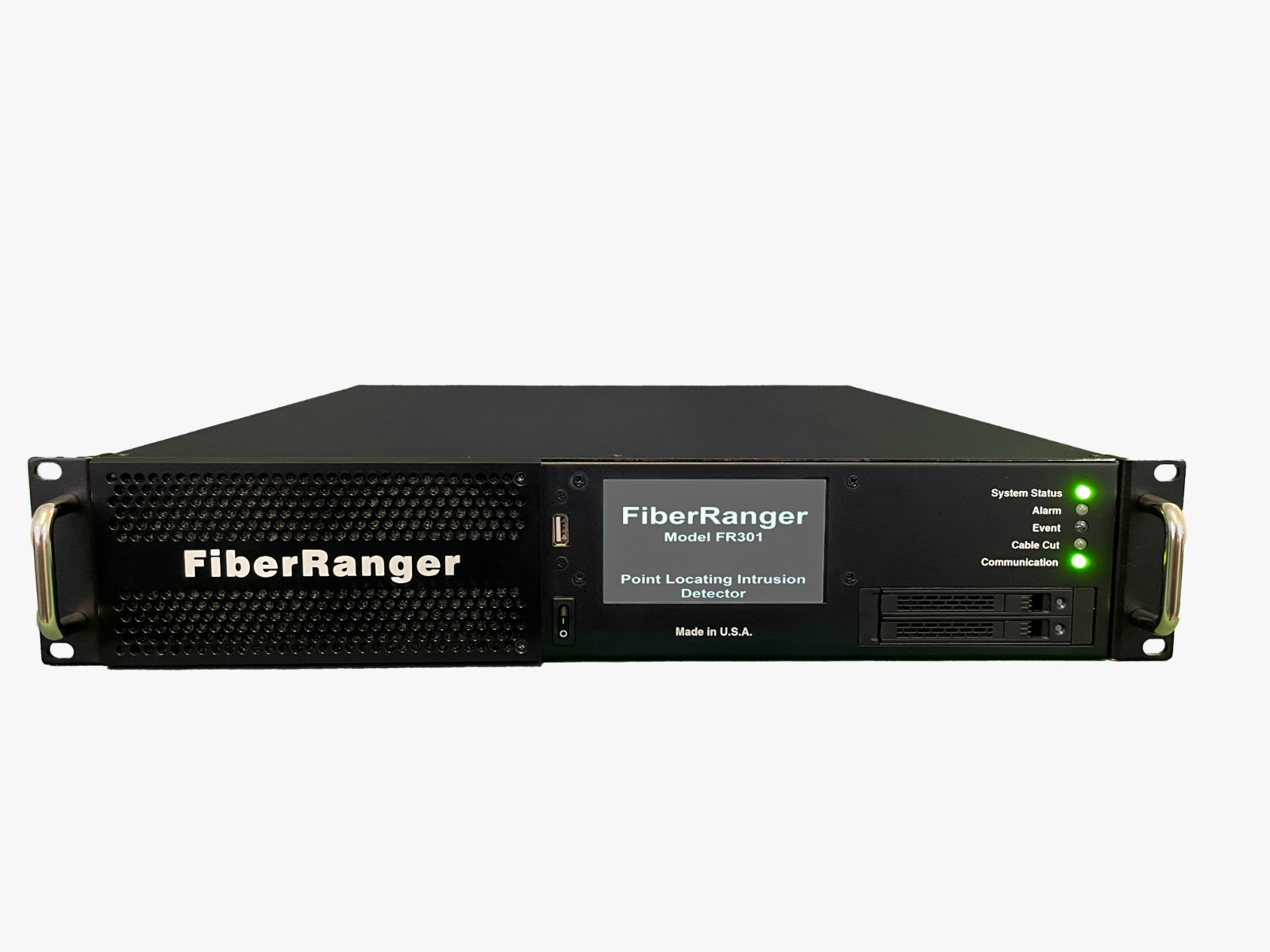

FR-301 is a point-locating Fiber Optic Intrusion Detection System designed to secure critical data network infrastructure, telecom backbone routes, and long-distance communication fiber cables. Data networks require reliable, fail-safe protection to prevent fiber tapping, cable tampering, digging activities, or sabotage attempts that could disrupt communication services or compromise sensitive data.
The FR-301 provides continuous, real-time monitoring of fiber-optic communication routes using advanced fiber-optic sensing technology. The system is engineered to detect, classify, and precisely locate intrusion attempts such as cable tapping, digging, vibration, cutting, or tampering — before the communication infrastructure is damaged or compromised — enabling rapid and effective response.
The FR-301 system can monitor up to 100 km of data network infrastructure per controller, making it ideal for long-distance telecom networks, national backbone fiber routes, and critical communication corridors.
How the System Works
- A single-mode fiber-optic sensing cable is deployed along the communication network route or integrated with existing telecom fiber infrastructure.
- The FR-301 controller sends optical pulses through the sensing fiber, enabling distributed monitoring along the entire cable length.
- When any disturbance occurs near the cable, such as digging, cutting, tapping, or mechanical vibration, the optical signal inside the fiber changes.
- The FR-301 controller analyzes these signal variations using advanced pattern-recognition algorithms to classify the event.
- The system generates a precise location alarm within a few meters, and the exact disturbance point is displayed on the monitoring interface, allowing operators to respond rapidly to threats.
Data Network Intrusion Detection
- Unauthorized fiber tapping attempts
- Fiber cable cutting or tampering
- Digging activities near underground communication routes
- Vibration caused by excavation tools or heavy machinery
- Communication infrastructure sabotage attempts
Pinpoint Location Alarms
- Intrusion location accuracy within a few meters
- Supports multiple simultaneous intrusion events
- Monitoring coverage up to 100 km per controller
Integration
-
Alarm data available via:
- TCP/IP (XML, ASCII, Modbus)
- Relay outputs
-
Can automatically trigger:
- Network security alerts
- Monitoring dashboards
- Security alarms or notification systems
- CCTV or response systems
Key Advantages for Data Network Security
- Continuous monitoring of long-distance communication routes
- Coverage up to 100 km per controller
- Early detection of threats to critical communication infrastructure
- Alarms displayed on maps with precise meter location and GPS coordinates
- Extremely low nuisance alarms using intelligent pattern-recognition algorithms
- No electrical power required along the sensing fiber route
- Immune to EMI, lightning, and harsh environmental conditions
- High reliability for mission-critical telecom and data networks
- Centralized monitoring from a secure Network Operations Center (NOC)
- Precise disturbance location enabling rapid response to infrastructure threats
© Fiber Optics Labs 2026. All rights reserved.
